Why Journaling Is No Longer Optional for Moms in 2026
There was a time when journaling was a hobby for me. It was a time to note the splendor of the day or capture a good book I was fully immersed in.
But over time, journaling has metamorphosed into something far more essential—a space for possibilities, clarity, and solutions.
As a mom in 2026, journaling is no longer about recording life as it happens. It’s about processing life as it unfolds. It’s where I untangle thoughts I don’t have time to speak out loud, where I return to myself when everything around me feels chaotic, and where I make sense of the roles, responsibilities, and expectations that come with modern motherhood.
Life hasn’t slowed down.
And neither has the mental and emotional load moms are carrying.
That’s why journaling is no longer optional.
It’s essential.
Not as another task on an already full list—but as a way to stay anchored to yourself in a world that constantly pulls you outward.
The Modern Mom’s Mental Load Is Heavier—and More Invisible
The term mental load has been around for years, but what it represents has evolved overtime.
Research in cognitive psychology shows that decision fatigue increases when people are required to constantly switch roles, anticipate needs, and manage emotional outcomes—not just complete tasks. Moms do this all day, every day.
You’re not just remembering appointments or school forms.
You’re anticipating:
How your child might react emotionally
What your family needs before they ask
How to keep the household running smoothly without friction
How to manage your own stress without letting it spill over
This kind of emotional forecasting is exhausting.
Studies on emotional labor—particularly in mothers—show higher rates of chronic stress, anxiety, and burnout when there is no consistent outlet for processing internal experiences.
And yet, many moms still feel like they should be able to “handle it.”
That disconnect is where journaling becomes critical.
Why the Brain Needs a Place to Offload Thoughts
Neuroscience gives us an important insight:
The brain is not designed to store everything—it’s designed to process.
When thoughts remain unexpressed, they don’t disappear. They loop.
Research on expressive writing (notably by psychologist James Pennebaker) has shown that writing about thoughts and emotions helps reduce stress, improve emotional regulation, and even support immune function.
Why?
Because writing moves our thoughts:
From the emotional centers of the brain
Into the logical, meaning-making centers
In simple terms: journaling helps your nervous system calm down.
For moms, this is powerful, transformative.
Instead of carrying worries in your chest…
Instead of replaying conversations at night…
Instead of reacting from overload…
You give your brain a safe place to land.
Journaling vs. Scrolling: A Very Different Outcome
It’s tempting to reach for your phone when you’re overwhelmed.
And that makes sense—our brains crave relief.
But research on digital consumption shows that excessive scrolling actually increases mental fragmentation, making it harder to process emotions and stay focused.
Journaling does the opposite.
It slows your thinking.
It creates coherence.
It helps you integrate what you’re experiencing instead of escaping it.
This is especially important for moms who feel constantly overstimulated.
Writing helps restore a sense of internal order when everything else feels loud.
Journaling Is Emotional Regulation in Action
Emotional regulation isn’t about suppressing feelings.
It’s about understanding them.
Psychological research consistently shows that naming emotions reduces their intensity. This is known as affect labeling.
For moms—especially those parenting tweens and teens—this matters deeply.
Children don’t learn emotional regulation from lectures.
They learn it from proximity. They learn from their parents and particularly their moms. They learn it from you.
When you have a place to process your emotions privately, you’re less likely to react impulsively and more likely to respond thoughtfully.
Journaling becomes a form of modeling:
Pausing before reacting
Reflecting before responding
Processing instead of projecting
That’s not just self-care.
That’s the beginning of self-leadership.
Why Moms Are Losing Trust in Themselves
One of the quiet struggles many moms face is a loss of self-trust.
Research on identity diffusion shows that when people prioritize external demands for extended periods—without internal reflection—they often feel disconnected from their values, intuition, and sense of agency.
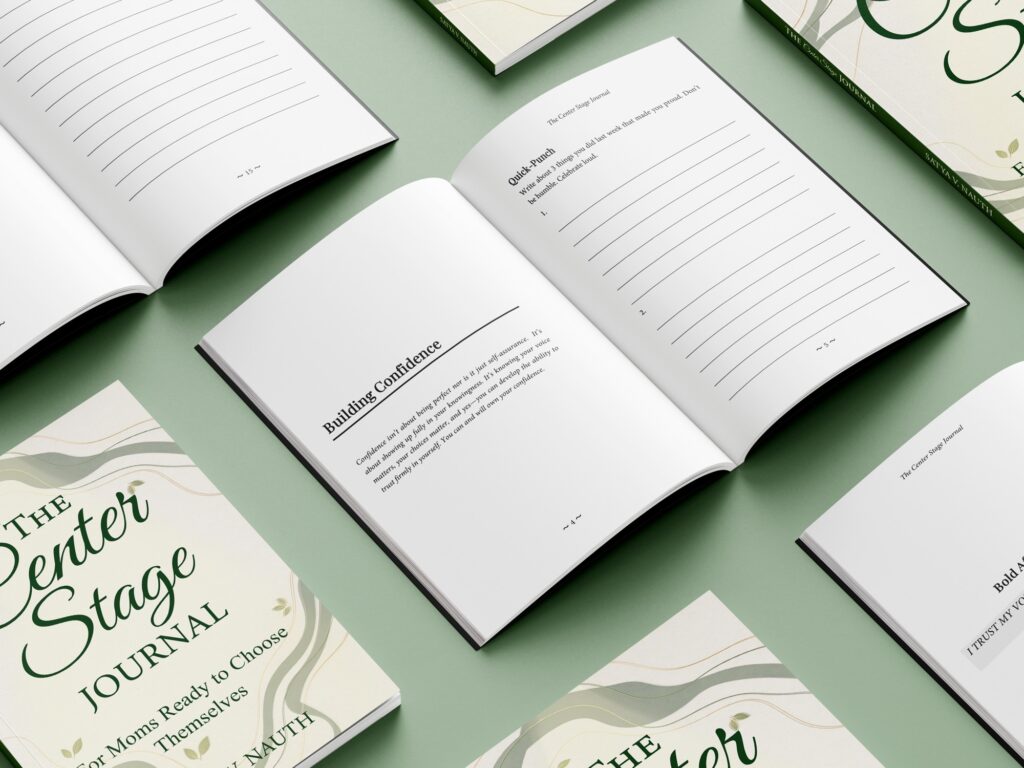
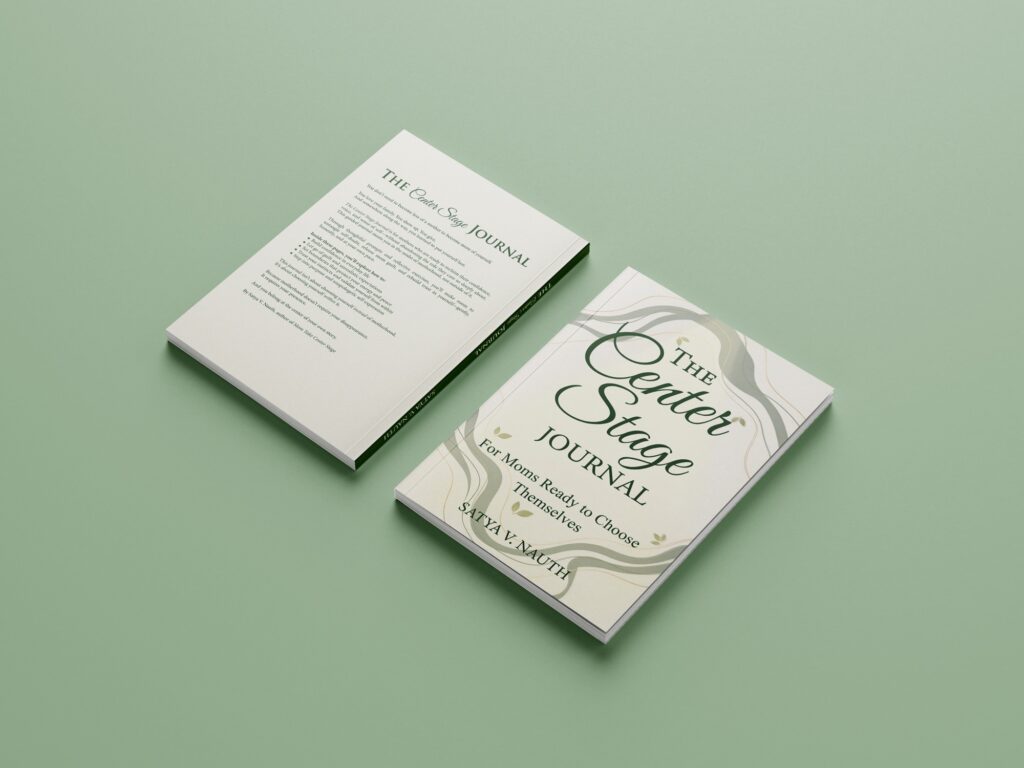
The book is about learning to live from your center again, instead of constantly adjusting yourself to fit everyone else’s needs.
Journaling supports that work by helping you hear your own voice—clearly and consistently.
Why Blank Pages Increase Resistance (And What Research Says)
Many moms believe they “should” journal—but don’t.
Behavioral science explains why.
When cognitive load is high, the brain resists open-ended tasks. Blank pages require initiation energy, decision-making, and creativity—all of which are already depleted.
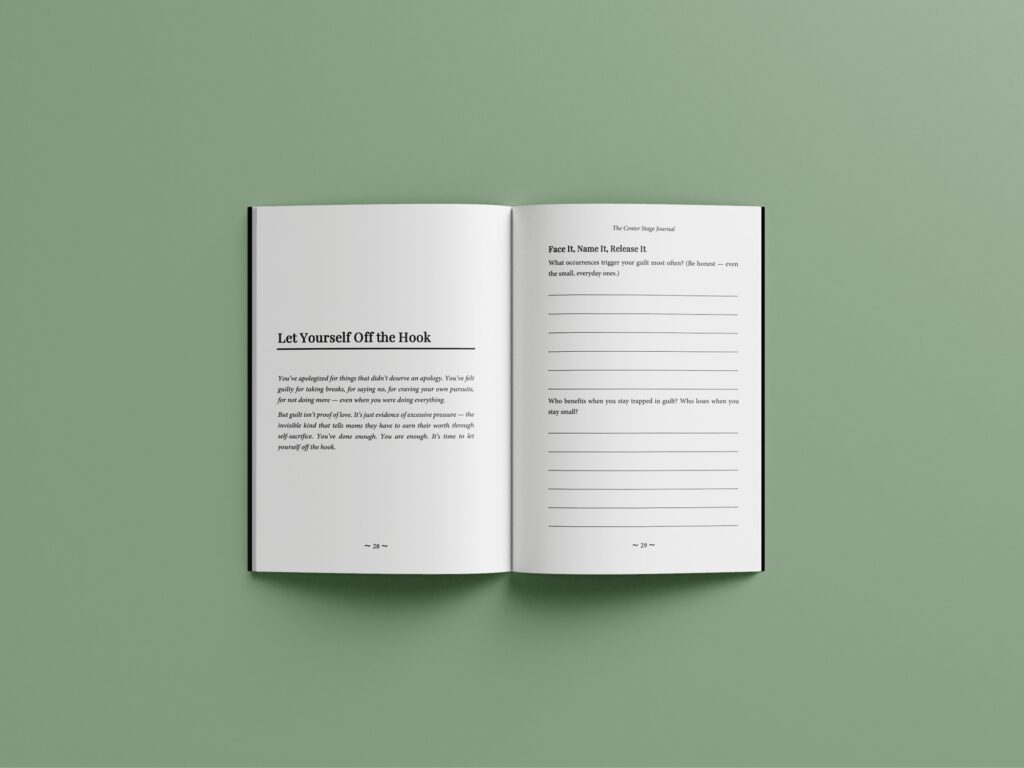
That’s why guided journaling works.
Research on habit formation shows that reducing friction increases consistency.
Prompts provide:
Direction
Psychological safety
A clear starting point
Instead of staring at a page wondering where to begin, you’re invited into reflection.
Structure doesn’t limit expression—it enables it.
Journaling as a Daily Micro-Practice (Not Another Obligation)
One of the biggest myths about journaling is that it requires time. Time you don’t have.
The truth is, it doesn’t.
Research on micro-practices shows that even 5–10 minutes of intentional reflection can significantly reduce stress and increase clarity when done consistently.
The goal isn’t volume.
It’s presence.
A few intentional sentences can:
Shift your emotional state
Clarify a decision
Ground you before the day begins or ends
This is especially important for moms who feel like their time is never truly their own.